Conviction Page
How Can You Be So Sure About Bitcoin?
Because Bitcoin is the only monetary system governed entirely by math.
Why This Page Exists
Most people don’t lack intelligence — they lack clarity. They’ve been taught to think of money as something emotional, political, or cultural. They’ve never been shown that money can be understood mechanically, the same way you understand gravity, electricity, or thermodynamics.
This page exists to give you that clarity.
It answers the real question behind every skeptic’s doubt:
“How can anyone be certain about something as unpredictable as money?”
The answer is simple because Bitcoin is the first monetary system in human history built on:
Fixed mathematical rules
Transparent issuance
Physics‑based security
Global consensus
Immutable verification
This page is not here to convince you.
It’s here to show you the mechanics so you can verify them yourself.
Once you understand the mechanics, the confidence makes sense.
Not because of belief — but because of math.
The Four Pillars of Certainty
Before you can understand why Bitcoin is inevitable, you must understand what makes it different from every monetary system that came before it.
Most systems rely on:
Trust
Authority
Politics
Committees
Central banks
Human decision‑making
Bitcoin relies on none of these.
Bitcoin is the first monetary system built on four mechanical pillars:
1. Fixed Supply (Math)
2. Increasing Demand (Economics)
3. Physics‑Based Security (Engineering)
4. Immutable Verification (Transparency)
These pillars are not opinions.
They are not predictions.
They are not beliefs.
They are rules, enforced by code, energy, and global consensus.
Once you understand these four pillars, the confidence makes sense. Not because of hype — but because of mechanics.
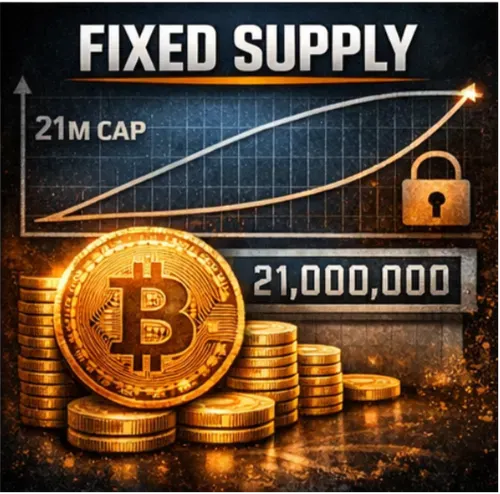
Pillar 1: Fixed Supply (Math)
Every monetary system in human history has eventually collapsed for the same reason: humans gained the ability to print more of it.
Bitcoin is the first monetary system that removes human discretion entirely.
Here’s what makes its supply mathematically inevitable:
The total supply is permanently capped at 21,000,000.
This cap cannot be changed by governments, corporations, miners, or developers.
New Bitcoin is issued on a fixed schedule, every ~10 minutes.
Every 210,000 blocks (roughly 4 years), the issuance is cut in half.
The difficulty adjustment ensures the schedule stays consistent, regardless of global conditions.
This creates a monetary curve that is:
Predictable — you can see the entire issuance schedule centuries into the future.
Transparent — every satoshi is accounted for on a public ledger.
Immutable — no one can inflate or manipulate the supply.
Verifiable — anyone can audit the entire system from home.
Bitcoin is the only asset on earth where you can know the entire future supply curve right now, down to the last unit.
This isn’t speculation.
This isn’t belief.
This is math, enforced by code and physics.

Pillar 2: Increasing Demand (Economics)
Bitcoin’s supply is fixed. But its demand is expanding, and not because of hype — because of global economic pressure.
Here’s what the world is waking up to:
Fiat currencies are inflating
Savings accounts are losing value
Governments are printing at historic levels
Workers are being displaced by AI
Institutions are searching for hard assets
Nations are diversifying away from the dollar
This creates a simple economic equation:
"Supply is fixed and Demand is rising"
Which leads to:
"Price must rise"
Demand is being driven by multiple unstoppable forces:
Institutional adoption (ETFs, asset managers, pension funds)
Corporate treasuries (public companies adding Bitcoin to balance sheets)
Sovereign accumulation (countries mining and holding Bitcoin)
Retail onboarding (millions of new users globally)
AI‑displaced workers seeking sovereignty and protection
Global distrust in traditional financial systems
This is not a trend.
This is not a bubble.
This is not a moment.
This is a global migration from inflationary money to mathematically scarce money.
When supply is fixed and demand increases, the outcome is not a prediction — it’s economics.
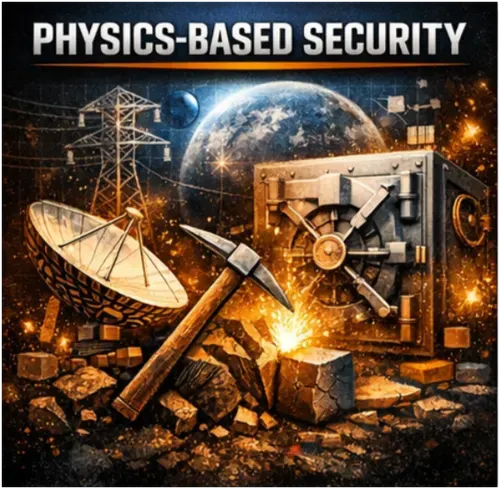
Pillar 3 — Physics‑Based Security (Engineering)
Every monetary system depends on trust. Bitcoin removes trust and replaces it with verification — a public, permissionless ledger anyone can audit from anywhere.
Why this matters mechanically:
Energy anchors the network to the physical world.
Attacking Bitcoin requires real‑world resources, not opinions or authority.
The cost to attack rises with the network’s energy use.
More miners → more energy → more security → higher attack cost.
No one can fake the work.
Proof‑of‑Work is a one‑way function: easy to verify, impossible to cheat.
Security scales with adoption.
As demand increases, more miners join, raising the energy wall even higher.
This creates a security model that is:
Engineering‑based — grounded in thermodynamics
Physics‑enforced — not dependent on human honesty
Globally distributed — no single point of failure
Mathematically verifiable — anyone can check the work
Bitcoin is the only monetary system where security is not a promise — it’s a measurable physical force.

Pillar 4 — Immutable Verification (Transparency)
very traditional monetary system depends on trust. Bitcoin removes trust entirely.
Instead of relying on institutions, Bitcoin gives you verification — a public ledger anyone can audit, anywhere, without permission.
Why this matters mechanically:
The ledger is append‑only.
Once a block is added, it cannot be altered without re‑doing the physical work behind it.
Every node enforces the rules.
No single entity controls the ledger.
No government, corporation, or miner can rewrite history..
Verification is distributed.
Anyone can run a node.
Anyone can audit the entire chain.
Anyone can verify the supply..
Consensus is mathematical, not political.
The rules are enforced by code, not committees.
Transparency eliminates corruption.
There is no hidden ledger.
No off‑balance‑sheet accounting.
No secret inflation.
This creates a system where:
Truth is public
History is immutable
Rules are enforced by everyone
Verification replaces trust
Bitcoin is the only monetary system where you don’t need to believe anyone — you can verify everything yourself.
Why Certainty Makes Sense
Once you understand the mechanics, the confidence is no longer mysterious — it’s logical.
Bitcoin is the only monetary system where:
Supply is fixed
Demand is rising
Security is physics‑based
Verification is public and permissionless
There is no belief system here.
No personality cult.
No political dependency.
No institutional trust requirement.
It is a closed system governed by:
Math
Economics
Thermodynamics
Consensus rules
These forces don’t care about opinions, headlines, or emotions.
They operate the same way gravity operates — consistently, predictably, and without negotiation.
This is why the conviction is not emotional.
It’s mechanical.
When you remove human discretion from money and replace it with transparent rules, predictable issuance, and physics‑based security, the outcome isn’t a guess — it’s a function.
Bitcoin doesn’t ask you to believe.
It asks you to verify.
And once you verify, certainty follows.
Destroying the Six Biggest Bitcoin Fears
Most people don’t reject Bitcoin because they understand it.
They reject it because they’ve been fed fear, headlines, and half‑truths.
So let’s kill the six biggest fears — cleanly, mechanically, and without mercy.
1. “What happens if there’s a blackout?”
A blackout is a local event.
Bitcoin is a global network.
The entire world has never lost power at the same time — not once in human history.
If one region goes dark:
Nodes reconnect
Miners relocate
Blocks continue
Bitcoin doesn’t die.
It waits — then resumes.
Your bank can’t do that.
2. “What if the internet goes out?”
Bitcoin doesn’t need the internet.
It needs communication.
Bitcoin already runs over:
Satellite
Mesh networks
Radio
Ham frequencies
Tor
Local intranets
People have literally sent Bitcoin using radio waves.
If the internet dies, Bitcoin survives.
If the internet returns, Bitcoin syncs.
Try that with your bank.
3. “How do you know there’s no backdoor?”
Because tens of thousands of independent nodes run the code. If there were a backdoor:
Someone would have found it
Someone would have published it
The entire network would reject it
Bitcoin is the most audited open‑source codebase on earth.
A backdoor can’t hide in public.
4. “Bitcoin isn’t real — why would I trust it?”
Bitcoin is more real than the money in your bank.
Your dollars are:
Printed at will
Frozen at will
Inflated at will
Controlled by committees
Bitcoin is:
Scarce
Verifiable
Permissionless
Borderless
Immutable
If “real” means backed by math instead of politics, Bitcoin is the realest money ever created.
5. “How do you know Bitcoin won’t go to zero?”
For Bitcoin to go to zero, all of this must happen simultaneously:
Every miner quits
Every node shuts down
Every holder sells
Every country bans it
Every institution exits
Every developer stops
Every user disappears
Every copy of the blockchain is deleted
That’s not a risk.
That’s a fantasy.
Bitcoin has survived:
Exchange collapses
Government bans
Miner migrations
Attacks
Fork wars
Media hostility
Market crashes
And it’s still here — stronger every cycle.
Things that go to zero don’t survive 15 years of global attacks.
6. “Is Bitcoin just a Ponzi scheme?”
A Ponzi scheme has:
A central operator
Promised returns
Hidden liabilities
New investors paying old investors
Bitcoin has:
No operator
No promises
No guaranteed returns
No central fund
No payouts
No marketing department
No CEO
No headquarters
Calling Bitcoin a Ponzi is like calling math a Ponzi.
It’s a decentralized protocol secured by physics — not a payout scam.
The Gauntlet Conclusion
Every fear collapses under scrutiny.
Every myth dies under verification.
Every objection dissolves when you understand the mechanics.
Fear is emotional.
Bitcoin is mathematical.
And math wins.
The Invitation to Verify
You don’t have to trust me.
You don’t have to trust influencers.
You don’t have to trust banks, governments, or institutions that have failed you before.
Bitcoin doesn’t ask for your faith.
It gives you the tools to verify everything yourself.
You can check:
The supply
The rules
The history
The transactions
The code
The consensus
No permission.
No gatekeepers.
No middlemen.
No “just trust us.”
Every fear collapses under verification.
Every myth dies under transparency.
Every doubt disappears when you see the mechanics for yourself.
That’s why I’m sure.
Not because of belief — but because Bitcoin is the only monetary system on earth that lets you audit the truth directly.
If you want certainty, don’t trust me.
Run the numbers.
Run a node.
Run the math.
Verification is sovereignty.
And sovereignty is the whole point.
Where This Page Fits in the Doctrine
This page is a root‑level conviction asset — the page you read when you want clarity, not noise.
If you want to go deeper into the system, here are the next layers:
→ Digital Asset Entrepreneur Doctrine
The foundation of the movement.
→ Mastery Path (Layers 1–6)
The identity, skills, and systems every DAE must build.
→ Proof‑of‑Work Ledger
The public record of your doctrine, your work, and your sovereignty.
→ The Operational Path
Identity → EOS → Audit → Asset → Automation → Sovereignty
The execution stack that turns conviction into action.
Every page in this ecosystem reinforces one truth:
Sovereignty is mechanical.
Verification is freedom.
Math is the foundation.
The Sentence That Ends the Debate
Bitcoin doesn’t require faith. Bitcoin requires a calculator.